Almost a year since my last post and by god its good to be back! Summer, Fall and Winter of 2009 were amazing. Spring 2010 is going well, and much has been learned since sharing past advice and resources. Through winter migrations to California, I now have a much better understanding concerning the WWOOF Organization as well as social networking media such as Craigslist rideshare. Between these two online tools, I was able to travel next to nothing while having all my needs met, and living on some of the most beautiful peaces of land and water. I now often ask myself the question "why not WWOOF my entire life", well, technically I haven't quit as I am still working and living on farms and have spent most of my past two years working and living on site of a farm. Technically you can call me a migrant farmer, but I tend to call myself funnier names like hippy gypsy farmer or farmer for hire. It is definitely an interesting life living on the road and having a house on wheels. Being mobile has definitely allowed me to go with the flow of where I'm needed and allowed me to experience some amazing places and meet superb human beings.
So where am I now? Currently I'm blogging off-the grid as Surya Nagar Farm and Homestead tending to a ten acre permaculture site that is ten years old complete with stocked fishing and swiming pond! My work consists of guilding trees, mulching pathways, planting annual veggies and growing a personal stock of perennial herbs from the horizon seed company. There is lots of space for people to come and enjoy, experiment and help out with. I think this land is destined to become a WWOOF site and I know I'm in no hurry to leave.
Down the road is the SLC Ecological Education Center. I am in charge of getting the landscape prepared with vegetables, water catchment, waste management, planting trees, mulching pathways and other tasks necessary and related to preparation of the two-week Permaculture Design Course. It is great to be on the site implementing and showcaseing real -life land base applications for permaculture design and ecological land use. Teaching is definitely a way to learn a lot about yourself and feel needed in the world, teaching through example is the only way to change the world. Come on down and sign up for our course, your guaranteed to leave with multiple brain fulls of life changing information and experience! http://www.sustainablelivingcoalition.org/
Friday, April 16, 2010

Monday, July 20, 2009

Sunday, July 5, 2009
The Creativity of Urban Agriculture

Urban Agriculture holds the potential to un-leash a whole host of creative projects that connect an inherent human desire to connect with the land, a need to eat fresh food and the need to heal urban communities of concrete blight and human malnuitrition. Please enjoy the following photos as the exemplify the potential of Urban Agricutlure.
Saturday, June 20, 2009


Sunday, March 8, 2009

Tuesday, February 17, 2009
Wind Projects at Iowa Schools

Great article on winder turbine construction in the following Iowa schools :
Spirit Lake, Forest City, Eldora-New Providence School, Sentral School in Fenton, Nevada High School in Story County , Clay Central in Royal, Akron-Westfield, Clarion-Goldfield in Wright County.
http://www.awea.org/windletter/wl_03sept.html
Sustinable Living Arts School--Edible Landscaping--Vancouver
 http://www.ediblelandscapes.ca/SLA_School.html
You will learn skills you can put to immediate use:
- winter gardening
- herbal medicines
- long term storage of foods
- seed saving
- water management
- plant propagation
- bee keeping
- fowl rearing
- woodlot management
- garden planning
- mushroom cultivation
and more!
Fifth National Small Farm Conference--Exploring Alternative Enterprises and Marketing Opportunities
 http://www.conferences.uiuc.edu/conferences/conferenceviewer2/view.cfm?conf=20033&page=20189&theme=&palette=
1. agritourism
2. alternative enterprises
3. aquaculture
4. internet marketing
5. cooperatives
6. farm to school
7. local food systems
8. marketing (national and international)
9. organic production
10. fiber and biofuel crops
11. nontraditional and emerging crops
12. urban farming
13. value added
14. variables in determining marketing options
15. medicinal plants
16. season extenders/high tunnels
17. contracting with larger producers
Tuesday, February 10, 2009
Iowa State Local Food Mapping Program
Iowa State just released a program that allows the user to search for just about any specialty/niche product in the state. This is an excellent tool for both farmers and food buyers to find the markets they need. Programs like these are what's needed to advance local food consumption in Iowa.
Just found a sweet local food mapping program from Iowa State
http://ia.marketmaker.uiuc.edu/index.php
Just found a sweet local food mapping program from Iowa State
http://ia.marketmaker.uiuc.edu/index.php
Friday, February 6, 2009
Cleveland, OH to OK Farm Animals in City

http://www.cleveland.com/news/plaindealer/index.ssf?/base/cuyahoga/1233653414210720.xml&coll=2
Tuesday, February 3, 2009
Free Permaculture Pamphlets

http://www.churchofdeepecology.org/permaculture.htm
1. Intro to Permaculture
2. Permaculture in Humid Landscapes
3. Permaculture in Arid Landscapes
4. Permaculture in Low Islands & Permaculture in High Islands & Permaculture in Granite Landscapes
5. Permaculture for Fire Control & Permaculture for Millionaires
6. Designing for Permaculture
7. Permaculture Techniques
8. Forests in Permaculture
9. Water in Permaculture
10. Permaculture in Urban Areas & Urban - Rural Links
11. The Permaculture Community
12. The Permaculture Alternative
Monday, February 2, 2009
Revolving Loan Program for Renewable Energy
http://www.dsireusa.org/library/includes/incentive2.cfm?Incentive_Code=IA06F&state=IA&CurrentPageID=1&RE=1&EE=1
Summary:
Summary:
| The Alternate Energy Revolving Loan Program (AERLP) is administered by the Iowa Energy Center and funded by the state's investor-owned utilities. The AERLP provides loan funds to individuals and organizations that seek to build renewable energy production facilities in Iowa. Eligible renewable energy technologies include solar, biomass, wind and small hydro. Successful applicants will receive a single, low-interest loan that consists of a combination of AERLP funds and matching lender-provided funds. The AERLP provides 50% of the total loan at 0% interest, with a maximum of $1 million. The remainder of the loan is provided by a lender at market rate. The maximum loan term allowed for the AERLP funds is 20 years. As the loans are paid back to the Iowa Energy Center, those funds are channeled back into the program and are made available to new applicants. |
Tuesday, January 27, 2009
Depaving Our Streets For Gardens

Follow this link to view a short little clip on how a one organization based out of Portland, OR is organizing volunteers to rip up pavement in exchange for community gardens and green space.
http://www.streetfilms.org/archives/depaving-day/
Get inspired, the day will come when you may be doing this in your neighborhood!
Saturday, January 24, 2009

Thursday, January 22, 2009
Online Chicken Breed Chart
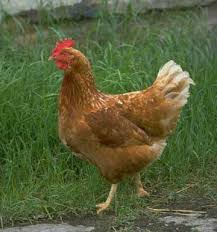
Chickens perform many functions in an ecological garden or farm and there are many kinds of chickens to choose from. Some lay more eggs than others, some eat different things, some prefer certain temperatures, some are loud and some are just plain cuter than the others. Check out this link to learn about 60 common kinds of chickens to learn what might be the best for you.
http://www.ithaca.edu/staff/jhenderson/chooks/chooks.html
Saturday, January 17, 2009
Iowa Food Cooperative Launched in Des Moines Shopping Center

The following excerpt was copied from:
http://www.leopold.iastate.edu/pubs/nwl/2008/2008-4-leoletter/coop.html
"This small shop in Merle Hay Mall is open only one day a month but business is booming. Loads of food – such as home-grown potatoes, apples, honey and frozen meat – come into the store all morning long, to be assembled and re-packaged by volunteers, then stacked neatly on wire shelves and in coolers and freezers for customers to pick up during the rest of the day.
The thriving new business is the Iowa Food Cooperative, which opened November 20. Two years of groundwork for the venture was funded by a $47,600 competitive grant from the Leopold Center’s Marketing and Food Systems Initiative. The project also has received assistance from Blooming Prairie Foundation, Iowa Department of Agriculture and Land Stewardship and a natural resource-based business opportunity grant. Merle Hay Mall has donated retail space for the cooperative’s first year of operation.
Here’s how the coop works: Farmer-members indicate what products are available and their prices, which are posted on a web site where members also place orders. Farmers bring their products to the Des Moines mall for pick-up by members one day each month. The first month’s pick-up had 44 orders totaling nearly $3,500, which included a 10 percent handling fee for the coop."
Read more at http://www.leopold.iastate.edu/pubs/nwl/2008/2008-4-leoletter/coop.html
The Homestead--Des Moines Center for Agriculture and Autism

The healing powers of plants are being applied to help those with special needs find meaning and comfort in the world of pain and confusion. Visit http://www.thehomestead.org/aboutus.htm to learn more about treatment for Iowans with autism and how natural settings and micro-agricultural enterprise can be combined to create a beautiful and sustainable environment for healing and living.
Saturday, January 10, 2009
Beginning Farmer Must Read

One knows when a book is worth reading when time after time the book is recommend and referenced as a must read for a particular topic or genre. When it comes to laying out the foundation for what a beginning farmer needs to know in small market gardening on small amounts of land, Elitot Colemon's Book, The New Organic Grower: A Master's Manual of Tools and Techniques for the Home and Market Gardener, earns the spotlight as a must read for fellow Iowans looking to get started in making a good living in growing food for a local community.
I found this excellent review on amazon by a Co-worker of the author:
"Practical idealists, the Shakers demonstrated that it is possible for man to create the environment and way of life he wants, not by complaining about the system but by building their own domain arranged to their liking. Eliot Coleman, farm manager of the Mountain School Program of Milton Academy in Vershire, Vermont, has demonstrated that it is possible to undertake small-scale, commercial farming and gardening without the use of harmful pesticides by using cost-effective, environmentally sustainable methods to produce spectacular results with economy of effort and means. By offering a wealth of ideas; by identifying the most efficient and practical machinery and tools; by offering simple and efficient production techniques; and advising on the most remunerative marketing methods, this book is for the gardener and small farmer who has an unfulfilled dream to established an organic enterprise with minimal expense. When low cost production methods are allied with the right machinery and marketing practices, the viability of the 1-5 acre farm producing high quality food is not only possible but also enjoyable and profitable.
The advantage enjoyed by the small farmer is quality. If the product is first class and in demand and you are a dependable supplier at reasonable cost there is never a problem finding customers. But it needs hard work and intelligence. When starting in the era of 'get big or get out' there were almost no models of commercially successful organic small farmers to provide inspiration and ideas and where they existed it was exhausting and neither cost effective nor efficient. But by seeking out the best from different parts of the world Coleman found the optimum to be about 2.5 acres per grower - enough to produce quality vegetables for 100 people. Produce from the school farm now set the quality standards for the area. He learned much from Helen and Scott Nearing - they were the most practically organized country people he has met - especially their skills in observation and planning. Coleman sets out the year's work on paper during the winter and has a notebook with sections for each crop. He rotates crops until he finds the optimum - the single most important practice in a multi-cropping program. "The 8-year rotation presented below is a good one to conclude with because it is the one I have followed since 1982. It has been well tested. I have thought about modifying it countless times but never have. Its virtues always seem to outweigh its defects, although that isn't to say it can't be improved. I'm sure it can. But it has been a dependable producer and I offer it here as a tried-and-true example of a successful rotational sequence that incorporates many crop benefits. The goal of this particular rotation is to grow 32 vegetable crops in adequate quantities to feed for a year the community of 60-some people who eat daily in the Mountain School dining hall. Since we have found that we can feed 40 people per acre, the rotation below represents 1.5 acres of land. The salad crops not included here are grown in a separate small salad garden close to the kitchen." However, the author points out that tomatoes do better being grown in the same place each year fertilized by their own waste.
Factors that affect plant growth - light, moisture, temperature, soil fertility, mineral balance, biotic life, weeds, pests, seeds, labor, planning and skill - need to be arranged to the plant's liking with the grower coordinating and combining them into a harmonious whole much like the conductor of an orchestra. Successful farmers understand that their role is to help the seed do what it is already determined to do. Good farming practices such as crop rotation, animal manures, green manures, cover crops, mixed cropping, mixed stocking, legumes, crop residues, and season extension have been used for generations, but removing the limiting factors to plant growth and generating a balanced soil fertility are ultimately the secret of success.
There are 22 chapters, each one dealing with an important element of success such as green manures, tillage, direct seeding, transplanting, weeds, pests, harvest, marketing, season extension. In addition there are three appendices on tools, the major vegetable crops and a one-page schematic outline of biological agriculture. If you plan to buy just one book on organic growing, you will find it difficult to beat this book."
http://www.amazon.com/New-Organic-Grower-Techniques-Gardeners/dp/093003175X/ref=pd_bbs_sr_1?ie=UTF8&s=books&qid=1231646025&sr=8-1
Thursday, January 8, 2009
Sources for Unusual Varities of Fruit to Grow in Iowa
 Iowa can grow many kinds of interesting fruit. Check out these online nurseries for all your prorogation needs.
(List Compiled by Lonnie Gamble. Read Lonnie's article on rare and unusual fruits here http://www.iowasource.com/home_garden/garden_fruit_0405.html)
Tom Wahl/Red Fern Farm: www.redfernfarm.com
Oikos tree crops: www.oikostreecrops.com
Lawyer Nursery: www.lawyernursery.com
Tripple Brook Farm: www.lawyernursery.com
Bagdersett Research Farm: www.badgersett.com
Burnt Ridge Nursery: www.burntridgenursery.com
Raintree Nursery: www.raintree.com
One Green World: www.onegreenworld.com
Tollgate Nursery: 20803 Junction Rd, Bellevue, Mi 49021, 616-781-5887, Larry Sibley or Corwin Davis
Hidden Springs Nursery: 170 Hidden Springs Lane, Cookeville, Tn, 38501 931-268-2592 – Annie or Hector Black
Subscribe to:
Posts (Atom)